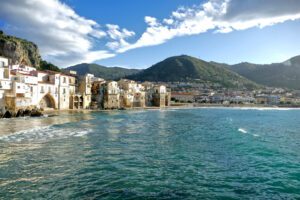
On the picturesque north coast of Sicily, nestled between the emerald-green waves of the Tyrrhenian Sea and the imposing rock of La Rocca, lies the charming coastal town of Cefalù. However, Cefalù is far more than just a seaside resort.
While its golden sands and crystal-clear waters attract beach bums from all over the world every summer, a rich past lies hidden behind the postcard-perfect backdrop.
In fact, history, culture, and the Mediterranean dolce vita converge in a captivating fashion. Already from afar, the silhouette of the medieval old town is impressive, dominated by the majestic cathedral, which has watched over the labyrinth of narrow streets, colorful facades, and sun-drenched squares since the 12th century.
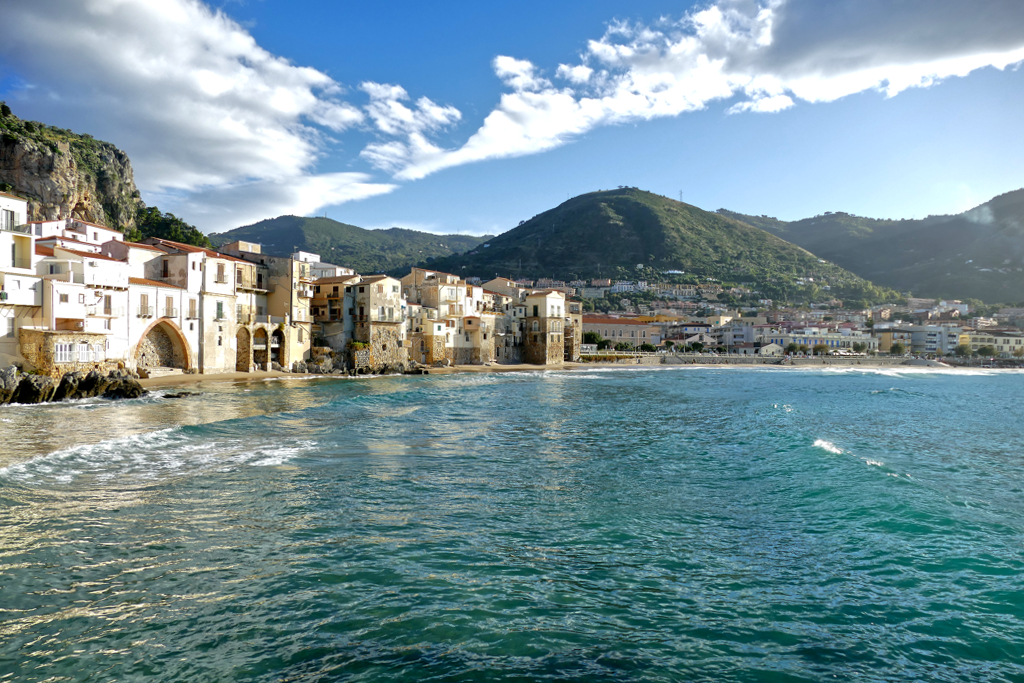
Cefalù – the Epitome of Bella Italia
Cefalù’s history is multifaceted and forms an exciting mosaic of cultures, conquests, and legends. Greeks settled here as early as ancient times. Later, Romans, Byzantines, and Arabs left their mark, before the Normans under King Roger II left their lasting mark on the cityscape in the 12th century.
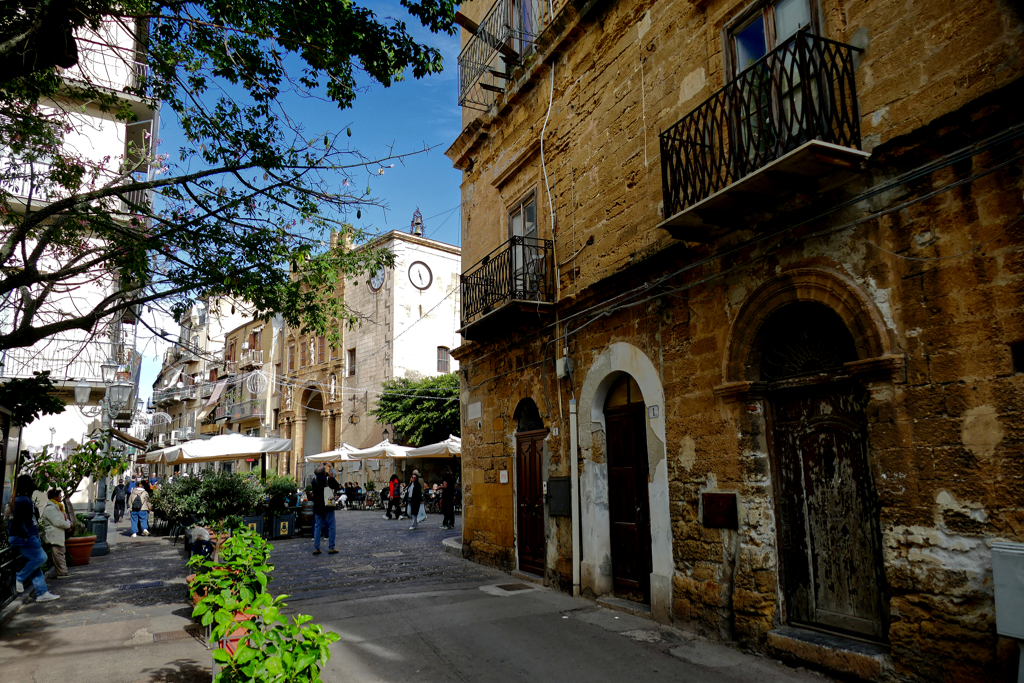
Roger the Great commissioned the magnificent Cefalù Cathedral, a masterpiece of Norman architecture whose golden mosaics are among the most beautiful on the island and have been a UNESCO World Heritage Site since 2015. A thriving city grew around this glorious masterpiece.
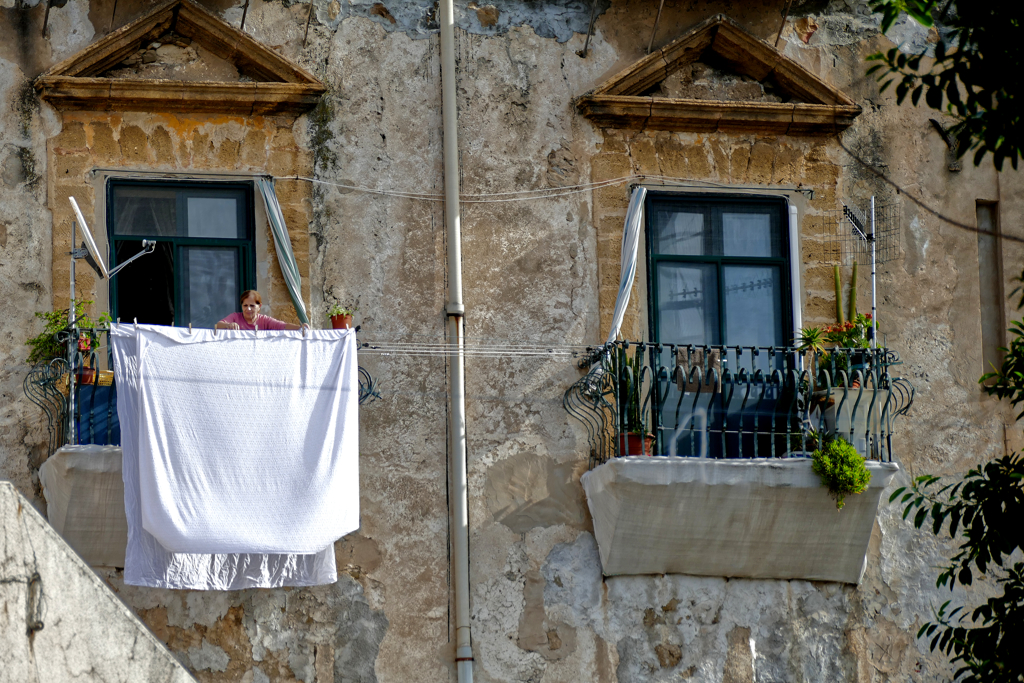
Indeed, Cefalù was an important trading and fishing center for centuries. The old washhouses on the Cefalino River, dating back to the Arab period, still bear witness to an everyday culture closely linked to water and the sea.
A visit to Cefalù is worthwhile not only for its rich history but also for its unique atmosphere. Idyllically situated by the sea, culture, nature, and Sicilian Dolce Vita come together in a very small space. Here you have the opportunity to truly experience the soul of Sicily.
Grand Tour of Cefalù
Admittedly, Cefalù, just like Taormina, is very touristy, there’s no denying that. But is it really any wonder that the most beautiful places are also the most visited? You certainly won’t encounter the problem of overtourism in the industrial areas on the outskirts of Sicily’s major cities.

So let’s stop complaining about overtourism—at the end of the day, we’re also just another nuisance to our fellow travelers—and revel in the picturesque beauty of these Mediterranean gems.
Around Piazza Garibaldi
We start our tour at the Piazza Garibaldi. Here, with the beautiful Church of Maria Santissima della Catena and the Clock Tower in the background, you can enjoy your first coffee or last aperitif of the day. Together, these buildings form a remarkable ensemble of medieval urban history. The Clock Tower rises on the foundations of former megalithic city walls. They were once part of the defenses and marked an entrance to the fortified city.
The tower received its distinctive clocks only in the 19th century. Today, it is a historical landmark that shows the former urban layout and allows visitors a glimpse into medieval Cefalù.
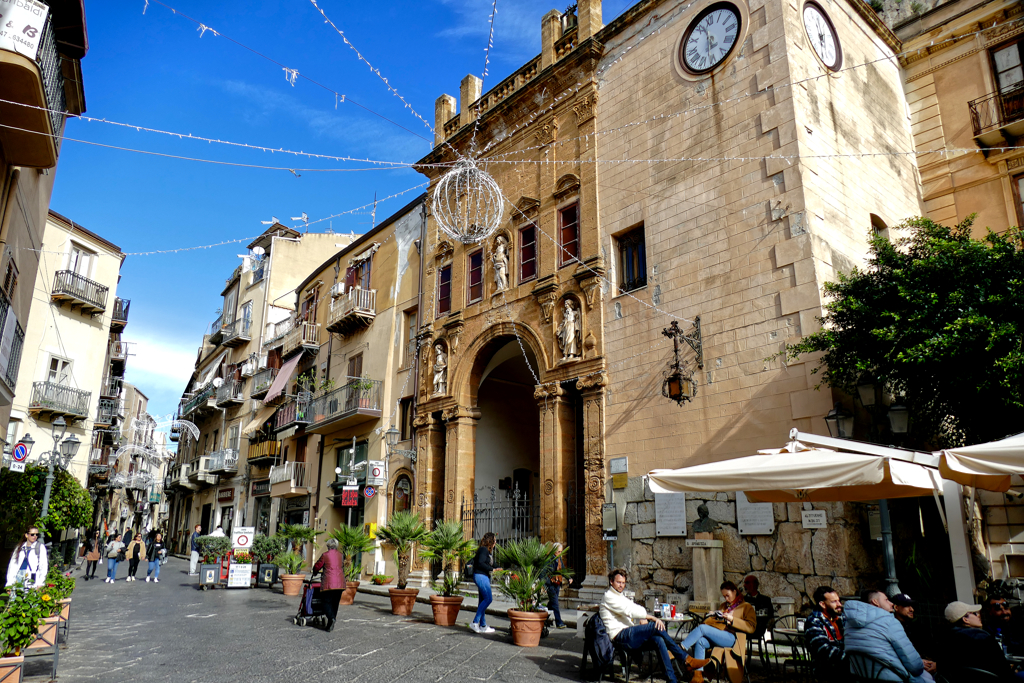
Right next to it is the Church of Maria Santissima della Catena. The Legambi family commissioned it in 1780. It stands on the site of the old city gate and was thus also closely integrated into the ancient city fortifications. Originally, it was attached to a small college that provided accommodation for impoverished women.
Later, it was dedicated to the Madonna della Catena. This Marian cult is widespread in Sicily. The interior is simple, with a single nave and subdued lighting.
Both structures exemplify how military, civil, and religious functions have become intertwined in Cefalù over the centuries.
Along Corso Ruggero
From Piazza Garibaldi, Corso Ruggero practically divides Cefalù in two. One side climbs gently towards the Rocca, while the other slopes down towards the coast.
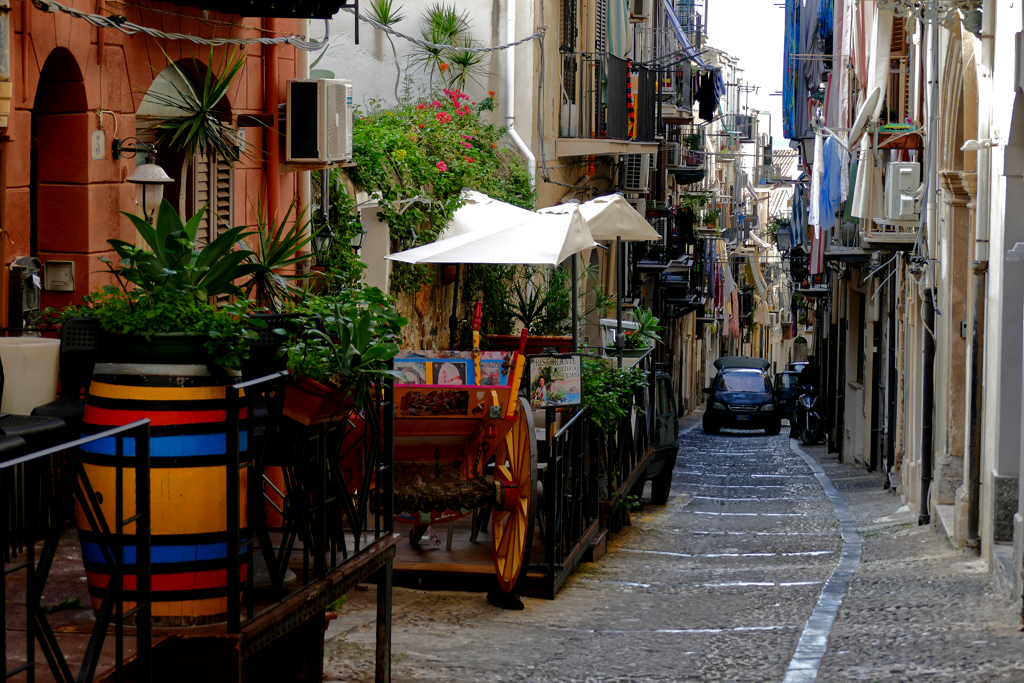
Souvenir shops and small ice cream parlors line the street. And because they are all so quaint and inviting, a stroll along Corso Ruggero often takes a little longer than planned, so keep that in mind.
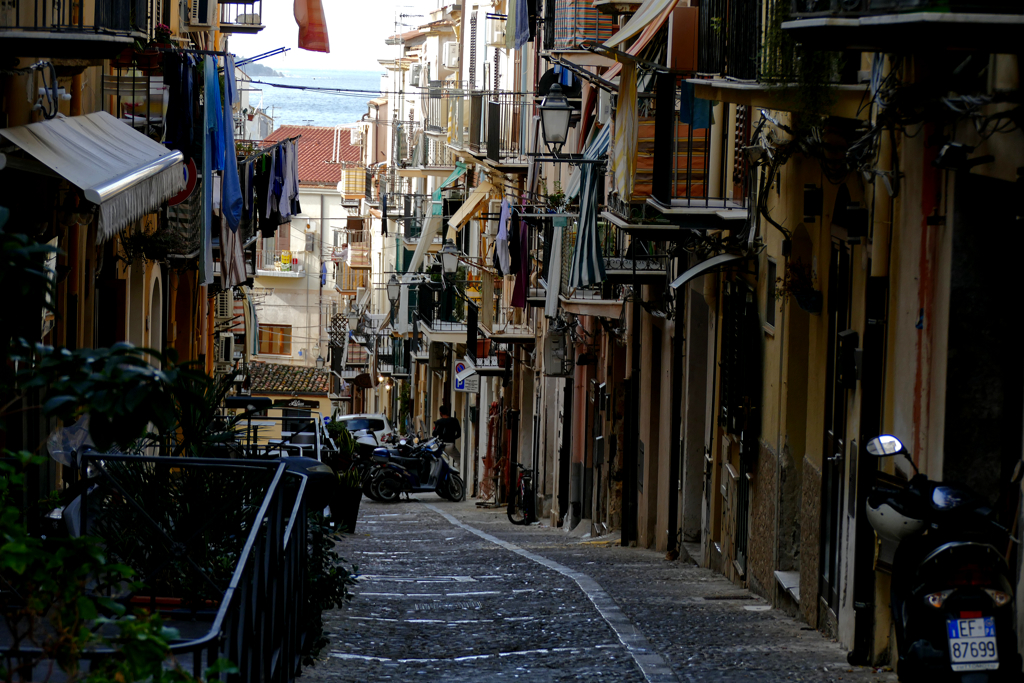
We get lost among all these delightful little shops. And the views down the picturesque side streets are simply breathtaking. The beauty of Ortos is simply overwhelming!
Around Piazza del Duomo
At the end of Corso Ruggero is the majestic square Piazza del Duomo, crowned by Cefalù’s Cathedral, obviously. You’ll also find a handful of charming coffee terraces there. We decide to enjoy not only the rightfully world-famous Italian coffee specialties but also the Sicilian classic, brioche con gelato.

It’s a thick milk roll generously filled with several scoops of ice cream. Those with a real sweet tooth top it off with whipped cream, but we can barely finish our portions as they are. “Next time we order Sicilian food, we’ll just order one portion to share,” Mimi decides firmly. We’d already ordered lunches the day before in Trapani that had severely tested our stomachs’ capacity. At least then we could get the leftovers packed up. Naturally, that’s not possible with ice cream.

After the culinary delights, it’s time for some culture, so we climb the steps to the Cathedral of Cefalù. The cathedral is one of the most important Norman buildings in Sicily, and its monumental twin-towered facade has dominated the cityscape since the 12th century. Construction began in 1131 under King Roger II. It combines Norman, Byzantine, and Arab influences into an architectural style typical of the Arab-Norman culture of Sicily.
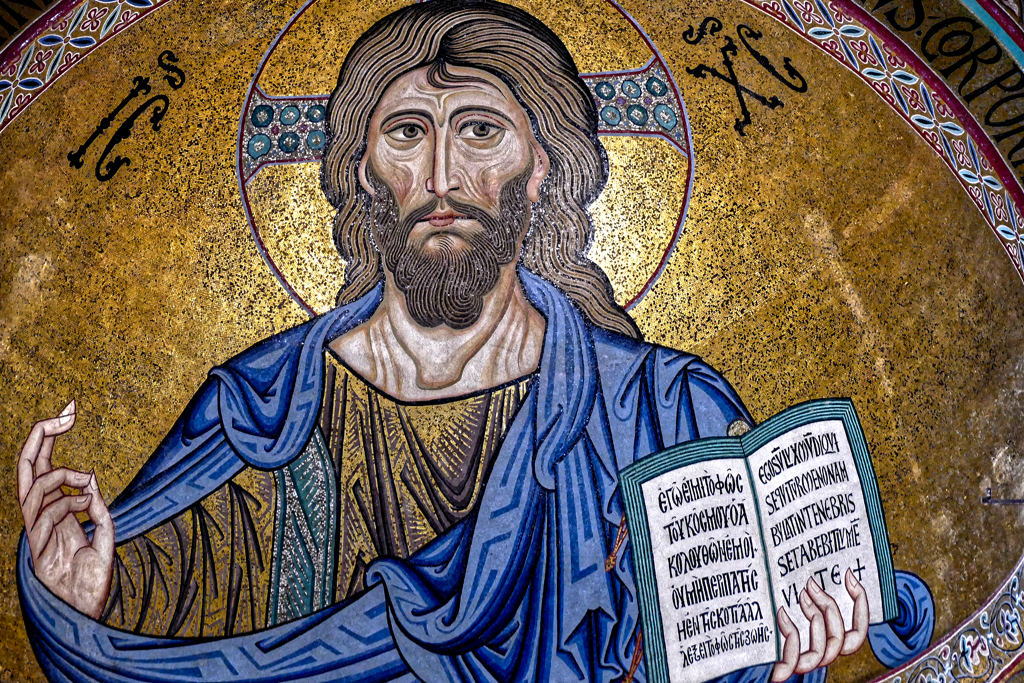
Inside, the Byzantine mosaic in the apse is captivating. Depicting Christ Pantocrator, it is one of the most beautiful and best-preserved mosaics of its kind. The Duomo was originally not only a religious center but also part of a larger royal complex that included a palace and a Benedictine monastery.
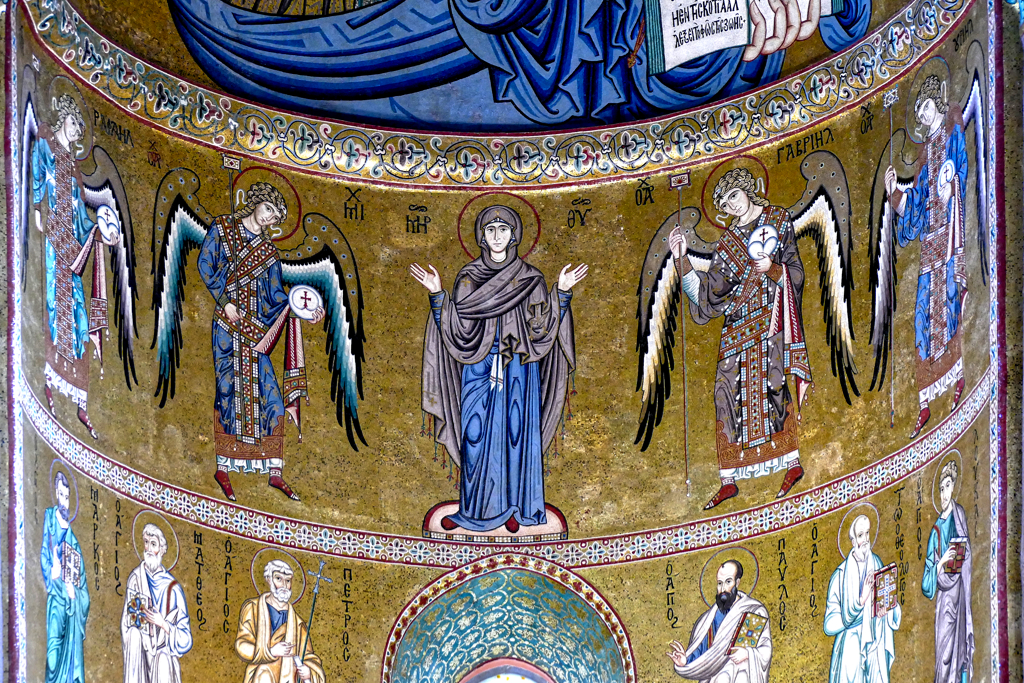
Over the centuries, the cathedral has been enlarged and restored several times, but has always remained a central element of local identity. Since 2015, it has been a UNESCO World Heritage Site, along with other Arab-Norman monuments in Palermo and Monreale.
Byzantine Mosaics in Sicily
Byzantine mosaics are among the most important visual media of the Middle Ages. They consist of small, colored glass and stone tesserae. Often, they have a gold background that makes the light glitter and makes the depicted figures appear to emerge from a celestial sphere. Their motifs follow a clear, theologically influenced pictorial order. At the center are Christ Pantocrator, Mary, prophets, apostles, and scenes from the Old and New Testaments. The mosaics were produced in a strictly hieratic style by highly specialized workshops, whose artists often had Byzantine training. In the Mediterranean region of the 12th century, these traditions also merged with local and Islamic influences to form a distinctive Norman-Arab-Byzantine art.
This interplay is particularly impressive in the Palazzo dei Normanni in Palermo, especially in the Cappella Palatina. The walls and vaults are covered with luminous glass and gold mosaics depicting biblical scenes and saints.
Similarly elaborate, but more focused on the liturgical sphere, are the works in Cefalù Cathedral. Here, too, gold backgrounds and Byzantine austerity dominate, but the decoration is more concentrated on the apse. The monumental Pantocrator, with his right hand in blessing and the Gospel open, forms the spiritual center of the church. He is surrounded by Mary, angels, apostles, and prophets in clearly defined pictorial zones. The mosaics were probably created by Byzantine-trained artists who were specifically summoned to Sicily or were already active in the region.
On the Waterfront
The cathedral closes at 1 p.m. on weekdays, and we’re rather rudely ushered out. No matter, we wanted to enjoy the town’s waterfront anyway. So we stroll along the coast to the town beach, Spiaggia del Porto Vecchio. Along the way, we climb some old fortifications, from which we have an unobstructed view of the endless expanse of the sea.

During peak season, Spiaggia del Porto Vecchio, like almost all beaches in Italy, sets up sun loungers and parasols for a fee. I hate that. Not because of the money, but because it robs even the most beautiful beach of all its charm.
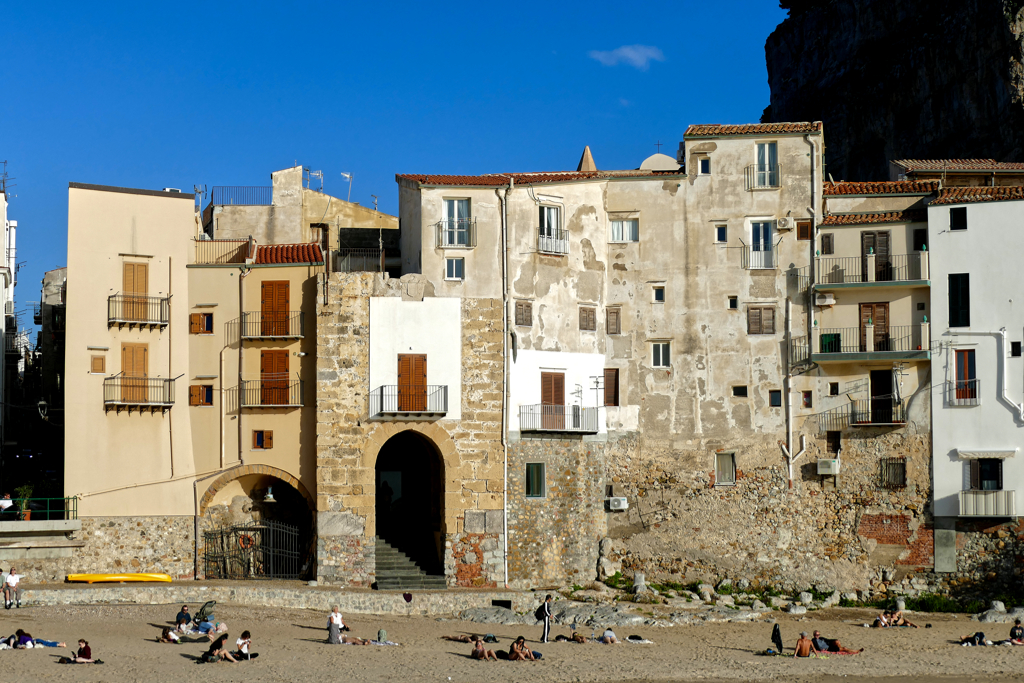
in front of the picturesque, crooked row of houses, is a wonderful place to unwind.
But we’re here in November, the loungers are closed for the winter, and we can relax on our towels in a pleasant 24 degrees Celsius. Incredibly, even the sea, in early winter, is a temperature that only makes us wince for a moment. The next second, we’re plunging into the waves and enjoying the crystal-clear water.
Even though the Sicilian winter has nothing in common with this time of year in other parts of Europe, the sun already starts to lose its strength around 3 p.m., and by 4 p.m., you already need to put on some clothes.
Well, it’s November, so we really cannot complain.
Sundowner at the Spiaggia di Cefalù
We wring the seawater out of our hair, brush off the sand, and roll up our beach towels. It had been a beautiful day. As the sun prepared for its well-deserved rest, we strolled along Via Vittorio Emanuele to the larger, much busier town beach. Unlike Spiaggia del Porto Vecchio, the surf here is so strong that only surfers in wetsuits are braving the waves.
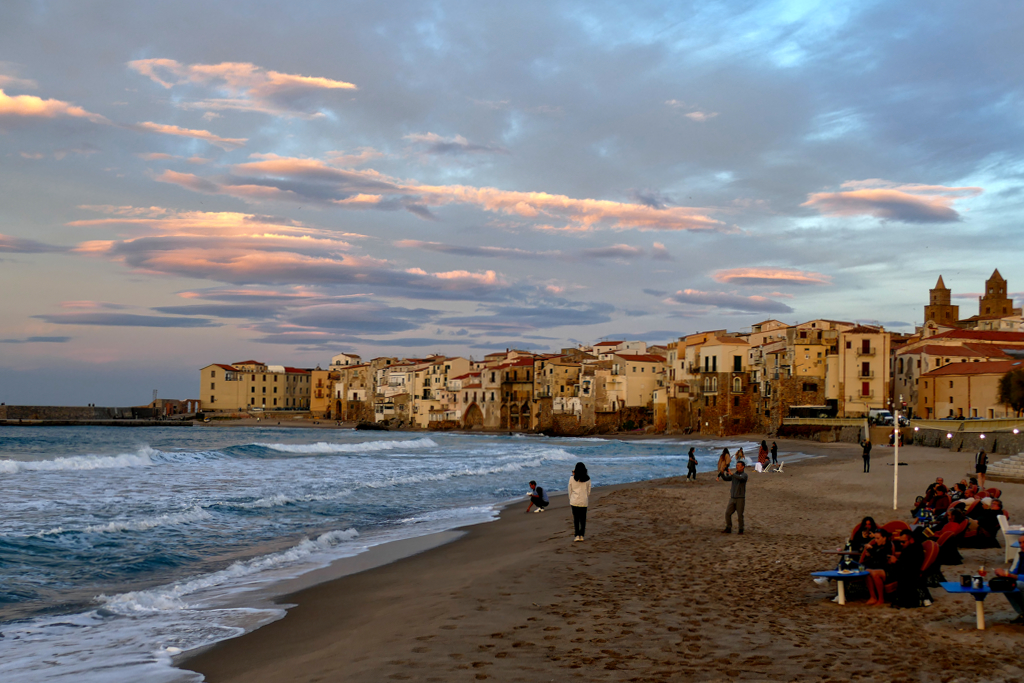
We settle down on the wooden terrace of Lido Pura Vida and order—what else?—a Spritz.
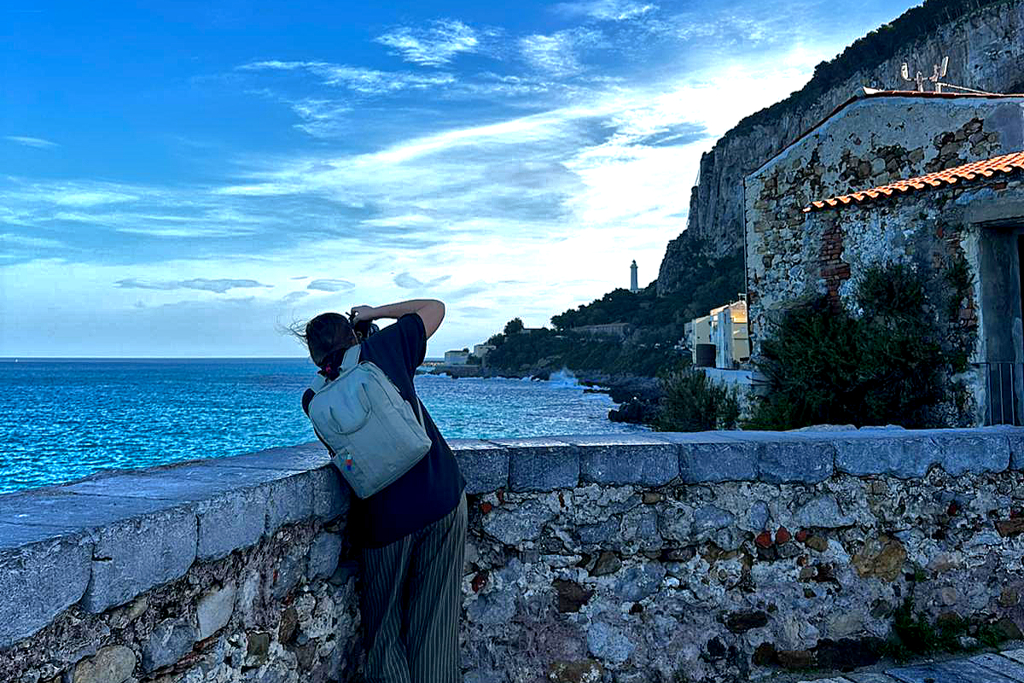
(Photo: Mimi Green)
Looking across the beach at this charming coastal town, we concluded: Cefalù may be touristy, but those tourists know where Sicily is at its most beautiful!
Practical Information
How to Get There And Around
The nearest airport is Palermo’s Falcone–Borsellino Airport. It is located about 35 kilometers west of the city. However, getting to the city center is super easy by bus or train, you really do not need to rent a car or take a cab. From the Palermo Centrale, you can then continue to Cefalù by train.
If you’re already on the island, you can reach Cefalù by train. Trains run about every hour, and tickets are quite cheap. You can obtain them online on Trenitalia’s website and at the machines as well as counters at train stations.
Once you’re in Cefalù, you can explore the quite small town on foot, obviously.
Visiting Organized
Although the regional bus system in Sicily is not bad at all, there are places on the island that are difficult to reach by public transport. If you are a slow traveler and can plan an additional overnight stay, it is possible to explore Sicily exclusively by public bus. But if you can’t plan a whole day for each remote attraction, here are some great options for exploring Sicily on organized day trips. Furthermore, you will of course need to book activities on the water and excursions to some islands through a tour operator*:
Where to Stay
If you plan on going to Cefalù for longer than just one day, you can choose from a couple of accommodations in the very center as well as on the outskirts*:
What to Eat
The cuisine of Cefalù reflects the typical Sicilian blend of Arabic, Mediterranean, and peasant traditions, relying on fresh, simple ingredients that impress with their quality. Thanks to its seaside location, fish plays a central role: dishes featuring swordfish, sardines, tuna, or other seafood are particularly common, often combined with lemon, olive oil, or fresh herbs.
Also typical of Sicily are dishes that combine sweet and sour flavors, such as caponata made with eggplant, celery, capers, and a hint of vinegar and sugar. Many visitors to Cefalù also try arancini, panelle, or sfincione, the island’s popular street food classics.
For those with a sweet tooth, a cannolo or a slice of cassata is practically a must. On hot days, a granita or a brioche con gelato is the perfect way to start the morning.
Where to Shop
When shopping in Cefalù, it’s especially worthwhile to look out for local handicrafts and gourmet products like almonds, sun-dried tomatoes, pistachio cream, or Sicilian honey. Many shops sell high-quality food items such as capers from the Aeolian Islands, pistachios from Bronte, aromatic herb blends, homemade jams, and traditional nougat. Markets offer particularly aromatic fruits such as figs or oranges. You should also try the local olive oil, which often has a stronger, grassier flavor than mainland Italian varieties.
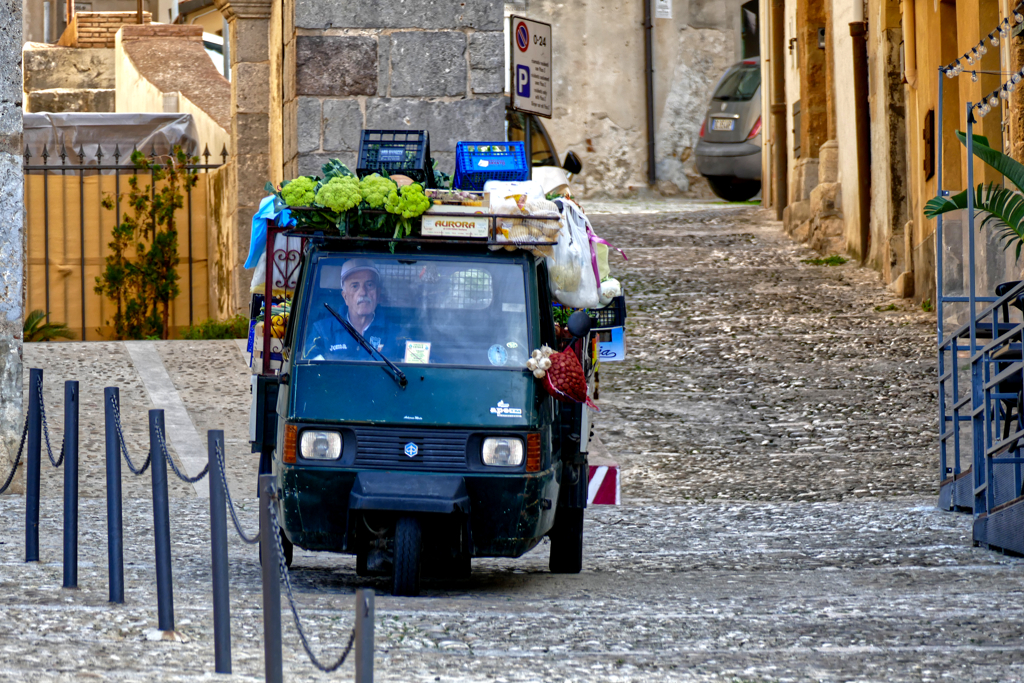
A good tip is to stroll through small delicatessens or markets in the morning – there you’ll not only find fresher produce but can often sample the goods and learn a lot about their origins.
In the small shops of the old town, you’ll often find hand-painted ceramics, typical Sicilian majolica, and artfully crafted wooden or wicker goods, all sourced directly from regional workshops. Fashion boutiques with light, Mediterranean summer clothing and linen items are also typical of Cefalù and are often more affordable if you look off the main streets.
Obviously, Italy is one of the 20 countries that have replaced their former local currency with the €uro. The exchange rate is 1 US$ = 0.85 EUR as of December 2025. However, you can check today’s conversion rate on this page. Mind you, paying by card and contactless is accepted everywhere, including regional and local public transport.
Map
On this map, you see where to find the most amazing places that make Cefalù one of the most alluring towns in all of Sicily. Clicking on the slider symbol at the top left or the full-screen icon at the top right will display the whole map, including the legend.
Cefalù was one of many overwhelmingly beautiful places I visited during my trip to Sicily. To read about the others, go to this post and take your pick!
Pinnable Pictures
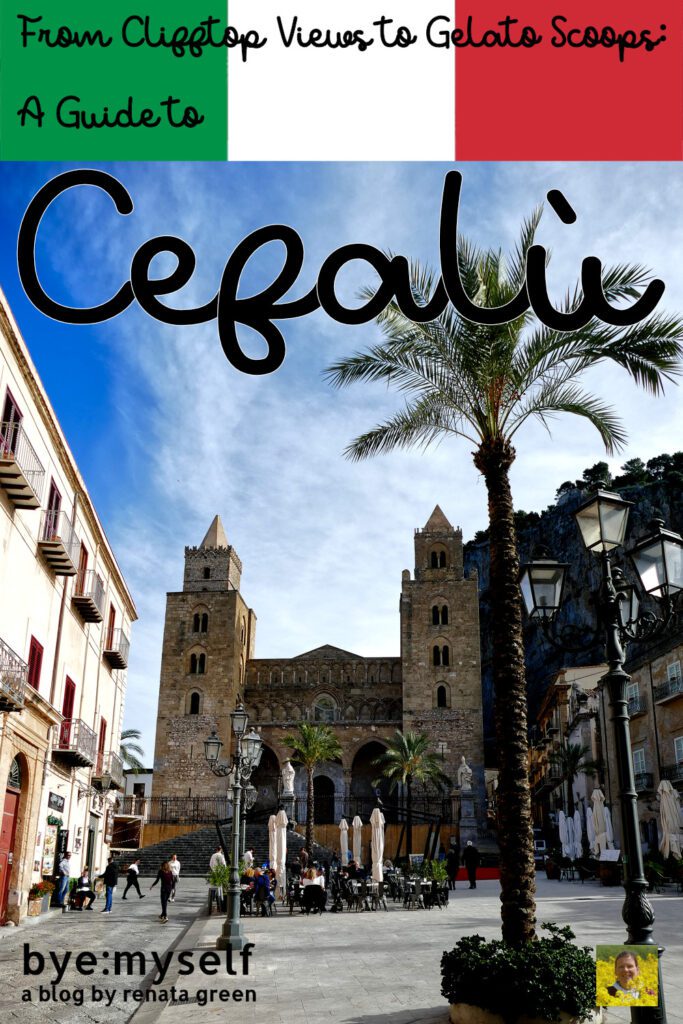
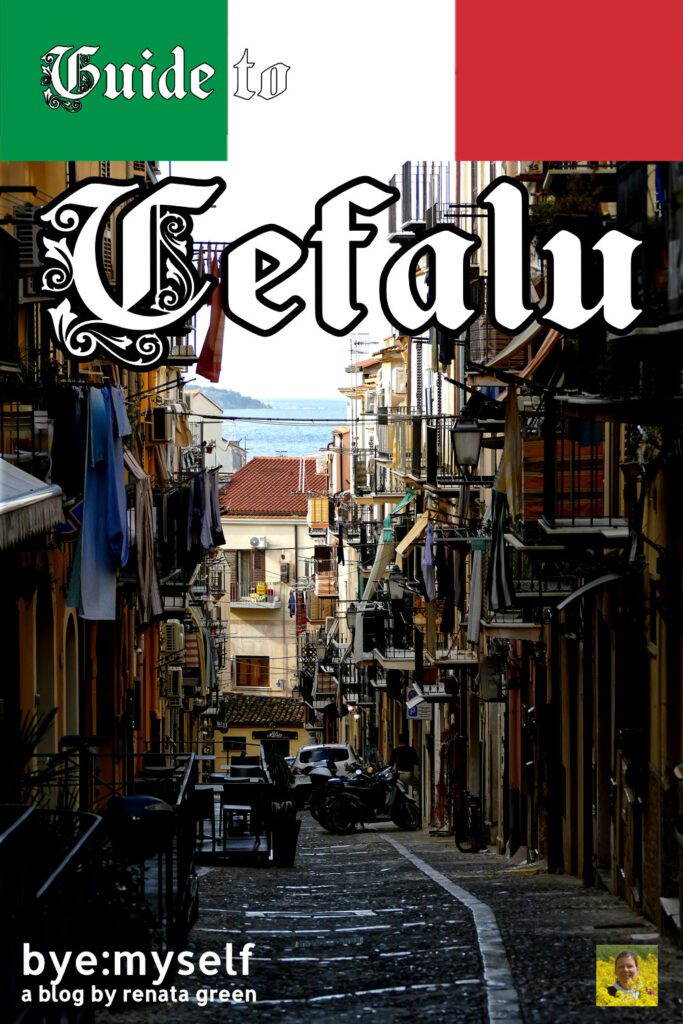
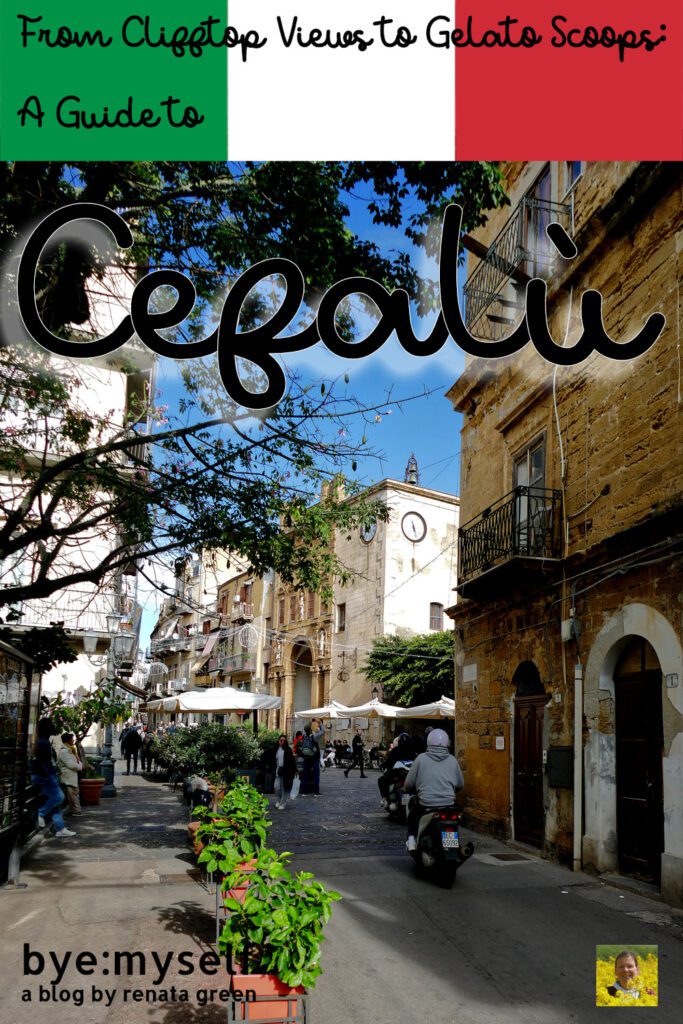
If you choose to pin this post for later, please use one of these pictures:
Did You Enjoy This Post? Then You Might Also Like These:
Best Street Art in PALERMO
Best Things to Do in PALERMO

A Day Trip to Isola delle Femmine: Coastal Trails And Crystal Waters
SYRACUSE Unveiled: A Trip to the Ancient Wonders and Coastal Charms of Sicily
What Not to Miss in TAORMINA, the Most Beautiful Town in Sicily
Take a Break: The Best Day Trips from PALERMO by Public Transport
From Clifftop Views to Gelato Scoops: A Guide to CEFALÙ
One Day in CATANIA, Sicily’s Building Ground of Grand Palaces
* This is an affiliate link. Hence, If you book through this page, not only do you get the best deal. I also get a small commission that helps me run this blog. Thank you so much for supporting me!